
A compact router is one of the most useful tools for woodworking, cabinetmaking, furniture building, and DIY projects. Its smaller size makes it easier to control than a full-size router, especially when trimming laminate, rounding edges, cutting shallow grooves, and following templates.
Woodworking using Trim Routers requires a lot of things to work with woods for a long duration. However, using corded compact router for a wood project helps out a lot.
In this guide, we compare six router options, including the SKIL RT1322-00, Bosch Colt GKF125CEN, SKIL RT1323-00, and compact cordless alternatives from DEWALT and Milwaukee. We’ve also included a budget-oriented TEENO router for shoppers who want an entry-level option.
Therefore, I will help you know about the top 6 corded compact routers in 2026 with detailed reviews along with buying guidelines.
Top-picks 6 Options for Woodworking and DIY Projects
As you are looking for the best compact routers, I will introduce you to some of my personal top choices. Well, we know that the wood router is the main power tool for DIY woodworkers and craftsmen.
We, wood craftsmen, need to do a lot of tasks in wood projects like sizing and connecting the grooves and joints. As well, as precisely engraving smooth surfaces, fabricating, profiling, and many more. And that is where we most likely need a high-end compact router to get the best outcomes.
Further, hobbyist craftsmen and professional woodworkers think a bit differently when it comes to choosing the proper woodworking routers. Well, in both cases compact routers are the best choices so far. Therefore, by compact corded routers, I am referring to the palm corded and trim routers as well.
So, here are the top choices of the best corded compact wood routers, I will give a review of –
- Best for versatility: SKIL RT1322-00, with fixed and plunge bases and a powerful 14-amp motor.
- Best for precision palm routing: Bosch Colt GKF125CEN, featuring variable speed and fine depth adjustment.
- Best fixed-base option: SKIL RT1323-00, designed for controlled routing and compatibility with 1/4-inch and 1/2-inch bits.
- Best cordless plunge alternative: DEWALT DCW620B, for woodworkers who want plunge-routing capability without a power cord.
- Best cordless palm-router alternative: Milwaukee M18 FUEL 2723-20, for portable trimming and edge-routing tasks.
- Best budget-oriented option: TEENO compact router, with a basic accessory package aimed at DIY users.
Best Compact Routers at a Glance
The table below compares the six products by their intended use, important features, power source, and suitability for different woodworking tasks.
| Product | Best For | Key Features | Power Source | Best Fit | Check Price |
|---|---|---|---|---|---|
| SKIL RT1322-00 | Versatile routing | 14-amp motor, variable speed, fixed and plunge bases | Corded | DIYers and woodworkers who need versatility | Check Price On Amazon View product on Amazon |
| Bosch Colt GKF125CEN | Precision trimming | 1.25 HP max, variable speed, soft start, fine depth adjustment | Corded | Cabinetmakers and detail-focused woodworkers | Check Price On Amazon View product on Amazon |
| DEWALT DCW620B | Cordless plunge routing | Brushless motor, variable speed, plunge-base design | Cordless | Woodworkers who prioritize mobility | Check Price On Amazon View product on Amazon |
| Milwaukee M18 FUEL 2723-20 | Portable edge routing | Brushless compact-router design, cordless operation | Cordless | Mobile woodworking and on-site trimming | Check Price On Amazon View product on Amazon |
| SKIL RT1323-00 | Fixed-base routing | 10-amp motor, speed control, soft start, 1/4-inch and 1/2-inch collets | Corded | Workshop routing and repeatable cuts | Check Price On Amazon View product on Amazon |
| TEENO Compact Router | Budget DIY projects | 800W motor, variable-speed claims, compact fixed-base design | Corded | Beginners and occasional home projects | Check Price On Amazon View product on Amazon |
Product specifications and package contents can change. Confirm details on the retailer’s current listing before ordering.
Now comes the time you check out my honest and thorough reviews of the top 6 corded compact routers.
Afterward, you will also acknowledge some proper guidelines which will help you get the perfect compact router for your woodwork.
1. SKIL RT1322-00: Best for Versatile Routing
The SKIL RT1322-00 is a versatile corded router designed for users who want both fixed-base and plunge-routing capability in one package. Its 14-amp motor and adjustable speed range make it suitable for a variety of woodworking operations.
Key Features
- 14-amp motor rated at approximately 2.5 HP.
- Variable speed from approximately 10,000 to 25,000 RPM.
- Fixed and plunge bases.
- Soft-start technology.
- Electronic feedback to help maintain speed under load.
- 1/4-inch and 1/2-inch collets.
What Makes It Worth Considering?
The main advantage of the RT1322-00 is its versatility. A fixed base is useful for edge profiles and repeated cuts, while a plunge base is better suited to starting cuts inside a workpiece.
Its adjustable speed also helps users match the router to the bit and material. This can be particularly helpful when working with different woods or larger-diameter bits.
However, the RT1322-00 is larger and heavier than a typical palm router. If your main tasks involve trimming laminate or routing small edges, a lighter compact model may be easier to handle.
Best for: DIYers and woodworkers who need fixed-base and plunge-base flexibility.
Potential drawback: Its size and weight make it less convenient for delicate, one-handed trimming than a smaller palm router.

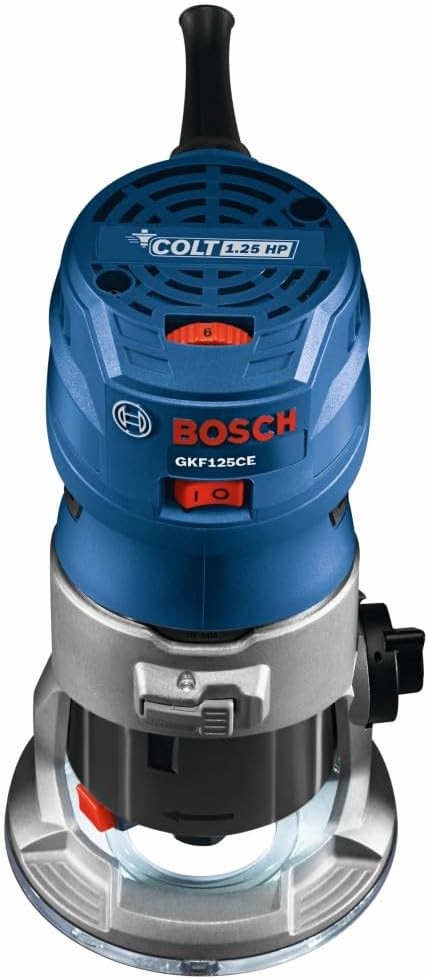
2. Bosch Colt GKF125CEN: Best for Precision Palm Routing
The Bosch Colt GKF125CEN is a compact corded palm router designed for controlled trimming, edge shaping, and detail work. It combines a 1.25 HP maximum motor rating with variable-speed control and a depth-adjustment system.
Key Features
- 1.25 HP maximum motor rating.
- 7-amp motor.
- Variable speed from 16,000 to 35,000 RPM.
- Soft-start circuitry.
- Constant Response speed-control circuitry.
- LED lighting around the working area.
- Fixed base with macro- and micro-depth adjustment.
- 1/4-inch collet.
Why Choose the Bosch Colt?
The Bosch Colt is worth considering when control and precision matter more than maximum motor power. Its compact palm-grip design is well suited to trimming laminate, rounding edges, routing shallow grooves, and following templates.
Variable speed allows the operator to adjust the cutting speed for different bits and materials. The soft-start feature reduces the sudden torque that can occur when the motor starts, helping the user maintain control.
The router’s fine depth adjustment is another useful feature. When making shallow cuts or working with delicate materials, small adjustments can make a meaningful difference in the final result.
The main limitation is that this model uses a 1/4-inch collet. It is not the right choice if your projects require 1/2-inch-shank router bits. Also, the plunge base is not included in the standard package described by Bosch, so check compatibility and additional costs before buying.
Best for: Cabinetmakers, furniture builders, and DIYers who prioritize precision trimming and edge work.
Potential drawback: Its smaller motor and 1/4-inch collet limit its suitability for some heavy-duty applications.
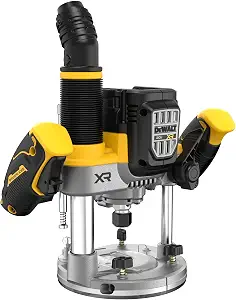
3. DEWALT DCW620B: Best Cordless Plunge-Router Alternative
The DEWALT DCW620B is included because it appears in your supplied product list. It is important to understand that this is a cordless plunge router, not a corded compact router.
Its brushless motor and plunge-base design make it an alternative for woodworkers who need mobility and want to avoid managing a power cord.
Key Features
- 20V MAX cordless platform.
- Brushless motor.
- 2-1/4 peak HP rating.
- Variable-speed control.
- Plunge-routing design.
- Integrated dust-collection features.
- Battery and charger sold separately in the tool-only package.
What Are the Advantages?
A cordless plunge router can be useful when routing large panels, working at different locations, or moving around a workpiece without a power cord getting in the way.
The plunge design allows the bit to enter the material vertically, which is useful for grooves, recesses, and other cuts that do not begin at the edge.
The brushless motor and variable-speed control are designed to support demanding routing applications. Nevertheless, actual runtime depends on the battery, material, bit, cutting depth, and feed rate.
Because the DCW620B uses a battery, it does not meet the strict requirement for a corded router. If uninterrupted mains-powered operation is your priority, choose one of the corded SKIL or Bosch options instead.
Best for: Woodworkers who want a powerful cordless plunge router and already use a compatible DEWALT battery platform.
Potential drawback: Batteries and chargers may need to be purchased separately, and the tool is not corded.
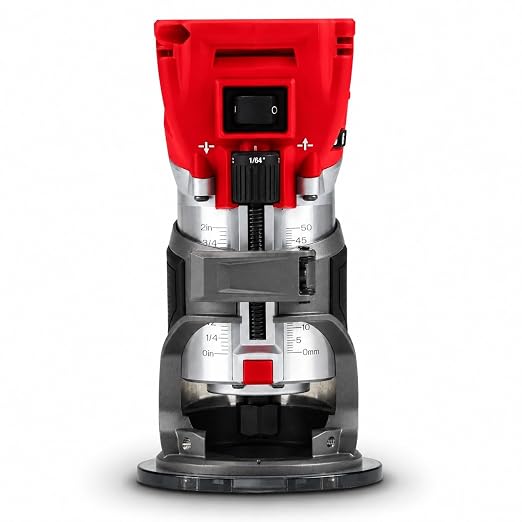
4. Milwaukee M18 FUEL 2723-20: Best Cordless Compact-Router Alternative
The Milwaukee M18 FUEL 2723-20 is another cordless option from your list. It is designed for compact routing tasks where portability and convenient handling are important.
Unlike the corded SKIL and Bosch models, it operates on Milwaukee’s M18 battery platform.
Key Features
- M18 cordless battery platform.
- Brushless compact-router design.
- Portable format for edge routing and trimming.
- Designed for woodworking applications that benefit from mobility.
Who Should Consider It?
The Milwaukee compact router can be a practical choice for woodworkers who regularly move between workstations or complete installation work away from a fixed workshop.
Cordless operation eliminates the need to manage a power cable while moving around cabinets, furniture, and large panels. This can make some tasks more convenient, especially when an electrical outlet is not close to the work area.
However, battery runtime and cutting performance depend on the application and battery capacity. Buyers should also confirm exactly which accessories are included in the current listing.
This is not a corded router. If your main requirement is continuous mains-powered operation, the Bosch Colt GKF125CEN or SKIL RT1323-00 is a more suitable starting point.
Best for: Mobile woodworkers and users already invested in the Milwaukee M18 platform.
Potential drawback: Battery and charger availability, runtime, and additional system costs should be considered before purchase.
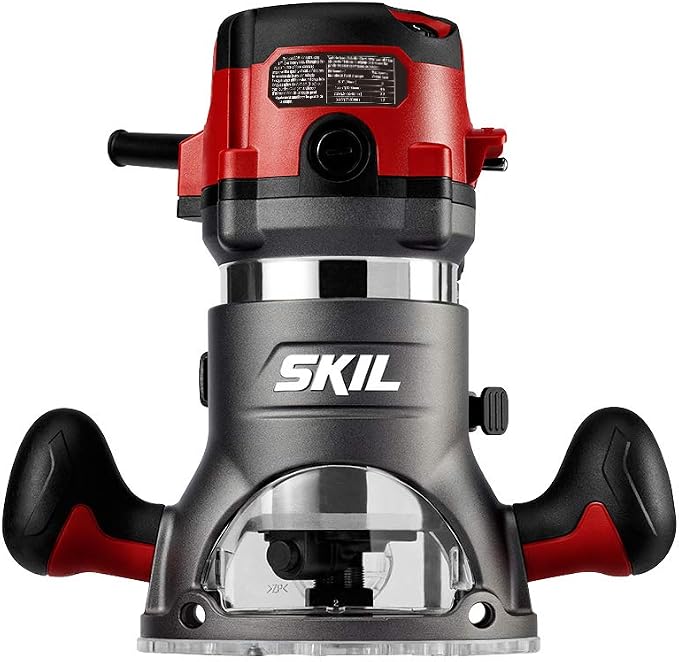
5. SKIL RT1323-00: Best Corded Fixed-Base Option
The SKIL RT1323-00 is a corded fixed-base router designed for users who want adjustable speed and support for both 1/4-inch and 1/2-inch router bits.
Compared with the RT1322-00 combo, this model focuses on fixed-base routing rather than including a plunge base.
Key Features
- 10-amp motor.
- Approximately 1.75 HP rating in published specifications.
- Variable speed from approximately 10,000 to 25,000 RPM.
- Fixed-base design.
- Soft-start technology.
- Live-tool indicator.
- 1/4-inch and 1/2-inch collets.
Why It May Be a Good Choice
A fixed-base router is particularly useful for edge profiling, trimming, and repeated cuts where a consistent cutting depth is important.
The RT1323-00’s support for both 1/4-inch and 1/2-inch shanks gives it more bit flexibility than a router that accepts only smaller shanks. This can be useful if your bit collection includes different sizes.
Its corded design also avoids battery-runtime limitations. You can work continuously as long as you have a suitable power supply and use the tool within its operating limits.
If you need to make plunge cuts inside a panel, however, a plunge router or a compatible plunge-base system is a better fit.
Best for: Workshop users who want a corded fixed-base router for routine routing and repeatable cuts.
Potential drawback: The fixed-base configuration is less suitable for plunge operations unless a compatible accessory system is available.
6. TEENO Compact Router: Best Budget-Oriented Option
The TEENO compact router is an entry-level option for people who want a compact tool for occasional woodworking and DIY projects.
Published product information describes an 800W motor, a fixed-base design, and a package that may include router bits and accessories. Confirm the exact contents and specifications on the current Amazon listing before purchasing.
Key Features
- Compact fixed-base format.
- Advertised 800W motor.
- Advertised maximum speed of approximately 31,000 RPM.
- Accessory package may include router bits.
- Corded-electric operation.
What Should You Expect?
For occasional home projects, a budget-oriented compact router may offer a way to explore trimming, simple edge shaping, and other light routing tasks without investing in a premium tool.
However, price should not be the only factor. Depth adjustment, base stability, collet quality, accessory compatibility, and access to replacement parts are also important.
For regular professional use, a tool with well-documented specifications and established service support may be a safer long-term investment. Check the permitted bit sizes, instructions, warranty, and included accessories before using this router for demanding work.
Best for: Beginners and hobbyists who need a compact router for occasional, light-duty projects.
Potential drawback: Verify the specifications, included accessories, and support arrangements carefully before purchase.

How to Choose the Best Corded Compact Router
Buying a router becomes easier when you match its specifications to the tasks you perform most often. These are the main factors to consider.
1. Motor Power
Motor power affects how well a router handles different bits and cutting loads, but a higher rating does not automatically make a router the best choice.
A compact palm router is often sufficient for laminate trimming, light edge work, and shallow cuts. Larger or more demanding applications may benefit from a more powerful router.
Consider the material, bit diameter, cutting depth, and frequency of use together rather than choosing by horsepower alone.
2. Fixed Base or Plunge Base
A fixed base holds the bit at a set depth during operation. It is often convenient for edge profiles, trimming, and repeatable cuts.
A plunge base allows the operator to lower the spinning bit into the material. This is useful for internal grooves, recesses, and certain joinery operations.
If you perform both types of work, a compatible fixed-and-plunge combo such as the SKIL RT1322-00 can offer more flexibility.
3. Variable-Speed Control
Different bits and materials may require different operating speeds. Variable speed gives you more control over the cutting process.
Follow the bit manufacturer’s recommended maximum RPM, especially when using larger-diameter bits. Never exceed the rated speed of the bit.
4. Collet Size
The collet must match the shank diameter of the router bit.
Common sizes include 1/4 inch and 1/2 inch. A router that supports both sizes offers greater flexibility, provided the appropriate collets are included and approved for that model.
Never force a bit into an incompatible collet or use an improvised adapter.
5. Depth Adjustment
Accurate depth adjustment is essential for clean, consistent results. Fine adjustment is especially helpful when cutting shallow grooves or fitting components that require close tolerances.
Check how easily the router adjusts and locks at the desired depth.
6. Ergonomics and Weight
A compact router should feel stable and comfortable to control. Consider grip shape, visibility around the bit, base design, weight, and how the power cord is positioned.
If possible, compare the tool’s dimensions and weight with your intended workpiece and working position.
7. Accessories and Compatibility
Accessories can expand what a router can do, but compatibility matters. Check whether the package includes a guide, edge guide, dust-extraction adapter, collets, or additional bases.
Do not assume that an accessory designed for one router model will fit another.
8. Price and Long-Term Value
A low purchase price can be attractive, but the long-term value also depends on build quality, warranty support, replacement parts, and the type of work the router can reliably handle.
Compare the complete package rather than the tool’s price alone.
Corded vs. Cordless Compact Routers
Both power types can be useful, but they serve slightly different needs.
| Feature | Corded Compact Router | Cordless Compact Router |
|---|---|---|
| Power supply | Mains electricity | Rechargeable battery |
| Runtime | Continuous with suitable power | Limited by battery charge |
| Mobility | Restricted by power cord | Greater freedom of movement |
| Workshop use | Convenient near an outlet | Convenient across multiple work areas |
| Extra costs | May require extension cords or accessories | Battery and charger may be additional purchases |
| Best for | Stationary workshops and extended sessions | Installation work and mobile woodworking |
If you mostly work at a bench near an electrical outlet, a corded router can be a practical choice. If you frequently work on-site or need freedom from a cord, a cordless model may be more convenient.
Remember that cordless tools can still deliver strong performance. The distinction is about the power source and workflow, not simply whether a router is powerful enough.
Tips for Safer, More Accurate Routing
A good router is only part of the equation. Proper setup and technique help improve both safety and cut quality.
- Wear eye and hearing protection. Routing can produce flying chips and significant noise.
- Secure the workpiece. Use suitable clamps or a stable workholding system rather than relying on your hands.
- Inspect the bit. Do not use damaged, dull, or incorrectly sized bits.
- Check the collet. Insert the bit to the depth specified by the manufacturer and tighten it according to the instructions.
- Set the correct speed. Follow the router and bit manufacturers’ recommendations.
- Take controlled passes. Avoid removing too much material in one pass.
- Keep the base stable. Maintain firm contact between the router base and the workpiece.
- Manage the cord. Keep the power cord away from the bit and the cutting path.
- Disconnect power before adjustments. Unplug the corded router before changing bits or making adjustments that could expose you to the cutting tool.
- Follow the feed direction. Use the conventional feed direction recommended by the router manufacturer. Avoid climb-cutting unless you are trained in the technique and the operation is specifically appropriate.
- Use dust collection where possible. Routing produces fine particles that can irritate the eyes and respiratory system.
Always read the instruction manual for your specific router before operating it.
Frequently Asked Questions(FAQQ)
1. What is the best corded compact router for woodworking?
The best choice depends on your projects. The Bosch Colt GKF125CEN is worth considering for precision palm routing, while the SKIL RT1322-00 offers fixed-base and plunge-base versatility. For fixed-base work with support for 1/4-inch and 1/2-inch bits, consider the SKIL RT1323-00.
2. Is a compact router powerful enough for cabinetmaking?
A compact router can handle many cabinetmaking tasks, including trimming, edge profiling, shallow grooves, and template work. Larger cuts and demanding operations may require a more powerful router. Choose the tool according to the bit, material, and depth of cut.
3. What is the difference between a palm router and a plunge router?
A palm router is generally a small, handheld router designed for control and light-to-medium routing tasks. A plunge router allows the bit to move vertically into the workpiece while the base remains supported. Some routers can accept different bases, but compatibility varies by model.
4. Should I choose a 1/4-inch or 1/2-inch collet?
Choose a collet that matches your router bits and intended applications. A 1/4-inch collet works with compatible 1/4-inch-shank bits. A 1/2-inch collet accepts compatible 1/2-inch-shank bits. Never use a bit with a shank that does not match the installed collet.
5. Is variable speed important on a compact router?
Variable speed is useful because different materials and bit diameters may call for different operating speeds. Always stay within the router’s specifications and the bit manufacturer’s maximum RPM.
6. Can a compact router cut grooves?
Yes. A compatible router bit and suitable setup can cut grooves, dados, and other channels. Choose the correct bit, set the depth carefully, secure the workpiece, and make multiple passes when appropriate.
7. Is the DEWALT DCW620B a corded compact router?
No. The DEWALT DCW620B is a cordless 20V MAX plunge router. It is included in this comparison only as a cordless alternative.
8. Is the Milwaukee M18 FUEL 2723-20 corded?
No. The Milwaukee M18 FUEL 2723-20 is a cordless compact router that operates on Milwaukee’s M18 battery platform.
9. Are router bits included with every compact router?
No. Package contents vary by model and seller. Some listings include selected accessories or router bits, while others sell the tool only. Confirm the current listing before purchasing.
10. Can beginners use a compact router?
Yes, provided they choose an appropriate tool, read the manual, secure the workpiece, use suitable bits, and follow safe routing practices. Start with simple operations and shallow cuts before attempting more demanding work.
Final Verdict: Which Compact Router Is Right for You?
The best corded compact router is the one that matches your projects, preferred cutting style, and required bit sizes.
For versatility, the SKIL RT1322-00 stands out because it offers fixed and plunge bases. For precision trimming and detailed edge work, the Bosch Colt GKF125CEN is a strong option to consider. If you prefer a fixed-base corded tool with both 1/4-inch and 1/2-inch collet options, the SKIL RT1323-00 deserves a closer look.
The DEWALT DCW620B and Milwaukee M18 FUEL 2723-20 are useful alternatives if you are open to cordless operation. The TEENO compact router may appeal to beginners seeking a budget-oriented option, but check its specifications and package contents carefully.
Before buying, compare the current price, included accessories, collet compatibility, and warranty information. A router that suits your actual workload will generally provide better value than simply choosing the model with the highest advertised power rating.

Leave a Reply